What is a Contingent Worker
The US Department of Labor defines a contingent worker as “a temporary member of an organization who does not possess a contract for permanent employment.” Under that guidance contingent workers include, part-time, contractors, on call, workers hired for a specific period, professional employment organizations, leased employees, agency temporary workers, day laborers, and vendor on premises. With these definitions, there are no limitations to defining a contingent worker. For the remainder of this article, I will use the term Permanent for a full-time worker.
Future of the Contingent Workforce
The population of contingent workers is growing. According to the Government Accounting Office (GAO), the number of workers in alternative work arrangements increased from 35.3 percent to 40.4 percent between 2006 and 2010. Those following contingent labor believe that the number of contingent workers could reach as high as 45 percent with the numbers increasing to 50 percent by 2020.
The increase in the use of contingent labor has been associated with reducing labor costs. Research indicates that the more prevalent reason is that it provides employers a way to manage and maintain their permanent workforce. Organizations are discovering that managing their workforce using contingent labor provides stabilization in their permanent workforce. This increases productivity as well as retenion of employees.
Challenges
The rise in contingent workers are creating challenges.
- Increased Labor Union Interest in Contingent Workers
- Application of Equal Employment Opportunity Law to the Contingent Workforce
- Increased Legislative Protections for the Contingent Workforce
- Limitation on the Employment of Independent Contractors
- Promotion of Code of Conduct for Temporary Staffing Agencies
- Questions About the Cost-Effectiveness of Contingents
There are significant issues with how companies classifyl independent contractors. A notable case was the ruling against Microsoft in 1992. The IRS ruled that Microsoft’s freelancers and temporary employees were not independent contractors. Microsoft failed the IRS 20 rule test for classifying a worker as an employee or an independent contractor. The lawsuit cost Microsoft $97 million and changed the way Microsoft utilized independent workers.
External Providers of Contingent Labor
With the increase in contingent labor use more companies are relying on external organizations to recruit and manage their contingent workforce.
Two such companies are WorkMark and Wonolo. Both companies provide HR services for potential companies including:
- Background checks
- Skill verification
- Payroll
- Rate employees
- Work with organizations to help them integrate contingent workers into their workforce
They both use smartphone apps and cloud services to manage their workforce.
WorkMarket
WorkMarket works with organizations to determine what types of and how many individuals the organization needs. According to Mousa Ackall, Vice President of Marketing at WorkMarket, “using their service provides employees a better faster cheaper approach to hiring contingent workers.” WorkMarket’s customers find that their contingent workforce is actually more productive than permanent employees. WorkMarket’s customers include the New York Times and Walgreens. The key to this arrangement is the use of technology. “Smartphones are the key to making this work,” according to Mousa. The contingent employees are well integrated into the organization. Walgreens is a success story. Walgreens has over 8,200 locations. There is an uncertain demand for repair operations. WorkMarket provides technicians to Walgreens with the technicians working for a permanent employee. Mousa indicated that usually two contingent workers are assigned to one permanent employee. This arrangement is working well especially since Walgreens Sr. Management communicated the advantages of this arrangement to its workforce. Key to this success was communicating the benefit of maintaining a set permanent workforce and using the arrangement with WorkMarket as augmenting the team in surge situations.
Wonolo
Yong Kim, CEO of Wonolo, explained to me that their business model is similar to Uber and Lyft. Wonolo performs background checks, verifies skills, pays employees, and maintains a contingent workforce for organizations. When an employer needs contingent help, they go to the Wonolo website and choose from workers that meet their needs. The app notifies the worker of the position, and if they are available, they accept the job. Wonolo specializes in helping businesses with 15 to 10,000 employees. They have listed several success stories on their website including event management, warehouse operations, and retail establishments. Yong works with employers to help them manage and integrate contingent workers into their organizations. The key to success according to Young is management’s acceptance of the contingent worker and how they communicate the reasons and benefits of using a contingent workforce.
Management and Retention of Contingent Workers
Management must be aware of the reasons and risks with hiring contingent workers. Just as with permanent workers there are recruitment and training costs that need to be minimized. High unexpected turnover of contingent workers is just as damaging as turnover of permanent employees. Attracting workers to the organization and maintaining the workforce on a project is a significant risk.
Techniques for retaining contingent workers follow the same patterns as retaining permanent workers. Cognitive theory looks at how our brains process information. One technique to retain contingent employees is frequent positive interaction with other employees and positive communication of company information. When a contingent employee joins an organization, they search for information to determine the culture of the organization and how they fit in that culture. The more positive interaction with employees and management the stronger the identity of the organization is impressed on the contingent worker. The contingent worker will identify themselves with the organization just as a permanent employee and the chances of retaining that worker increases.
Summary
Organizations that hire contingent workers only to reduce costs are not successful. Augmenting the permanent workforce creates a stable work environment that increases performance and retention. Communication from Senior Management and line management on the reasons and advantages of the use of contingent workforce provides stabilization of the Organizations permanent workforce.
Written by Charles Coniglio Published by Best Practice Institute to view this article and others click on this link https://www.bestpracticeinstitute.org/blog/contingent-workforce-best-practices/
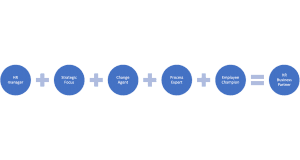 A typical Human Resource Manager or a Generalist worked in areas of training, recruiting, payroll, and performance reviews. Each of these roles supported the entire organization. Organizations hired outside consultants to work strategic tasks with line and executive management. Line and executive management gave HR their human capital requirements and the functional organizations filled the requests.
HR Executives believed that the right HR individual could do the strategic work of the consultant. HR Managers have the overall knowledge of HR processes and execution. However, to meet the roles necessary for the transformation from transactional to transformational HR managers and specialists required additional skills.
An essential component of the transformational strategy was the development of the Human Resource Business Partner (HRBP) Model. In this model, an HR Manager moved away from performing transactional tasks to more of a transformational role. For this role the HR Manager needed to add the skills necessary to support the Business Manager in a strategic capacity.
A typical Human Resource Manager or a Generalist worked in areas of training, recruiting, payroll, and performance reviews. Each of these roles supported the entire organization. Organizations hired outside consultants to work strategic tasks with line and executive management. Line and executive management gave HR their human capital requirements and the functional organizations filled the requests.
HR Executives believed that the right HR individual could do the strategic work of the consultant. HR Managers have the overall knowledge of HR processes and execution. However, to meet the roles necessary for the transformation from transactional to transformational HR managers and specialists required additional skills.
An essential component of the transformational strategy was the development of the Human Resource Business Partner (HRBP) Model. In this model, an HR Manager moved away from performing transactional tasks to more of a transformational role. For this role the HR Manager needed to add the skills necessary to support the Business Manager in a strategic capacity.
 reside in the embedded HR function. It is embedded in that the HRBP and support staff are located with the project team reporting to the line manager. Embedded HR no longer reports to the HR director. The HRPBs act like consultants however unlike consultants they have the power to make changes. Service centers provide the line managers with transactional services such as payroll, onboarding, benefits, and training. Centers of excellence provide the expertise to develop and deliver training, maintain and improve processes. An optional function, Operational Executors, provide executing support to the HRBP to allow the HRBP to remain in a strategic role. Some organizations combine the centers of excellence and service centers. Others outsource the service centers.

